
Best Calorie Deficit Calculator for Rapid Fat Loss: The Science & Strategy
🔥 Ultimate Fat Loss Calculator
Maintenance (TDEE)
0Min. Protein Goal
0g💡 Strategy: Stick to the Target for 10 days, then have one Refeed day at Maintenance level.
You’ve probably tried a dozen online calorie deficit calculators before. You punched in your age, weight, and height, got a “magic number,” followed it for two weeks, and… nothing happened. Or worse, you felt starved and eventually binged.
I’ve seen this pattern countless times. The problem isn’t usually the math itself—it’s the human factor.
Most calculators are rigid tools trying to predict a dynamic biological system. They don’t account for your actual activity levels (NEAT), the quality of your food (TEF), or metabolic adaptation.
In this guide, we aren’t just going to give you a number. I’m going to walk you through the “Gold Standard” equations, show you the critical flaws in most standard calculators, and teach you the Cyclic Deficit Strategy to strip fat off rapidly without crashing your metabolism.

Why Most Calorie Deficit Calculators Fail You (The “Activity” Trap)
Before we do the math, we need to fix the biggest error people make: Overestimating Activity Levels.
When a calculator asks how active you are, most people click “Moderately Active” because they go to the gym for an hour a day. This is a trap.
In my experience analyzing data, NEAT (Non-Exercise Activity Thermogenesis) is the real game-changer.
-
The Reality: You train for 1 hour. You sleep for 8. What do you do for the other 15 hours? If you sit at a desk, drive a car, and sit on the couch, you are sedentary, regardless of that intense Crossfit class.
-
The Consequence: Selecting “Active” can inflate your calorie allowance by 300–500 calories. That effectively wipes out your deficit before you even take your first bite.
My advice: Unless you have a physical job (construction, waiting tables), always set your activity multiplier to “Sedentary” or “Lightly Active” and treat exercise calories as a “bonus,” not food you’ve “earned” to eat back.

The Math: Mifflin-St Jeor vs. Katch-McArdle
Not all formulas are created equal. While the internet is full of simple multipliers, science has given us two specific equations that stand above the rest when looking for the best calorie deficit calculator method.
1. The Gold Standard: Mifflin-St Jeor
For 95% of people, this is the equation to use. It is currently considered the most accurate for estimating RMR (Resting Metabolic Rate) in individuals with average body composition. It replaced the old Harris-Benedict equation, which notoriously overestimated calorie burn.
2. The Athlete’s Choice: Katch-McArdle
If you know your Body Fat Percentage accurately, Katch-McArdle is superior. Why? Because it calculates based on Lean Body Mass (LBM), not total weight.
-
If you are muscular but heavy, Mifflin might underfeed you.
-
If you have high body fat, Mifflin might overfeed you.
Katch-McArdle sees the real engine (muscle) driving your metabolism.
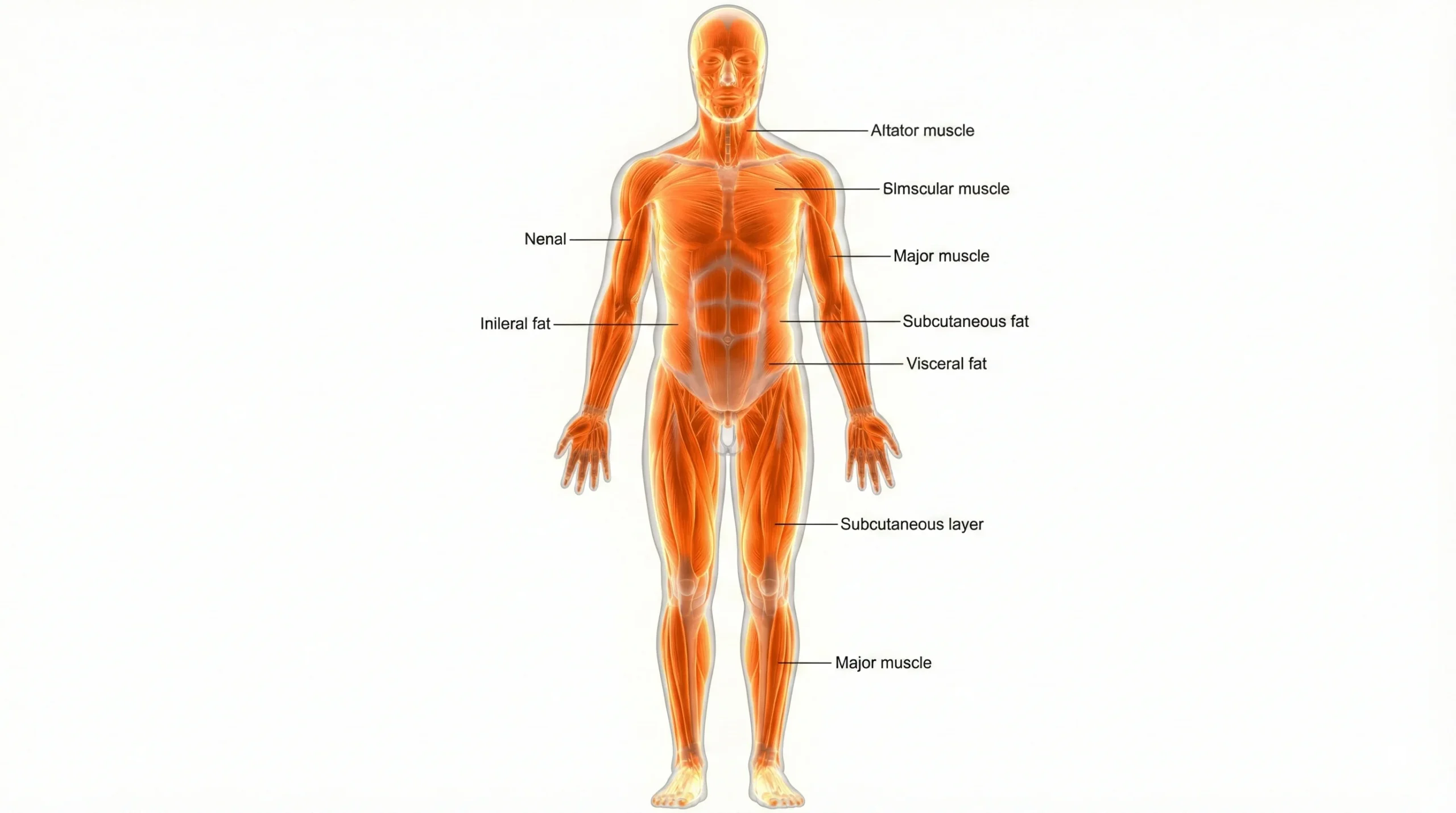
📊 Comparison Table: Choosing Your Formula
Here is a breakdown to help you decide which method to trust:
| Formula Name | Best For... | The Verdict (Pros & Cons) |
|---|---|---|
| Mifflin-St Jeor | Most People (General Population) | Pros: The current "Gold Standard." Very accurate if you have average body composition. Cons: Ignores body fat percentage. |
| Katch-McArdle | Athletes & Data Geeks | Pros: High precision. Uses Lean Body Mass. Perfect for "skinny fat" or muscular builds. Cons: Requires an accurate body fat % reading (DEXA, calipers). |
| Harris-Benedict | Obsolete / History | Pros: Widely available. Cons: Tends to overestimate burn by 5-15%. Avoid if possible. |
Beyond the Numbers: The “Missing Factor” in Fat Loss
Most simple calculators treat a calorie like a simple unit of energy. But biologically, 100 calories of chicken is NOT the same as 100 calories of donuts.
The missing variable is TEF (Thermic Effect of Food). Your body burns energy just to digest food.
-
Fats: 0-3% TEF (Very easy to store).
-
Carbs: 5-10% TEF.
-
Protein: 20-30% TEF (Metabolically expensive).
Real-world application: Two people can have a 500-calorie deficit.
- Person A eats a high-carb/sugar diet.
- Person B eats a high-protein diet.
Person B will lose fat faster and maintain more muscle because their net calorie intake is effectively lower due to the high metabolic cost of digesting protein. Plus, protein is the key signal to your body to hold onto muscle tissue during a deficit.

The Strategy: How to Lose Fat Fast Without Crashing
Numbers are just the starting line. The strategy is how you win the race. The biggest mistake I see is the “Eternal Deficit.” People calculate a 500-calorie deficit and try to stick to it for 6 months straight.
-
The Result: Your body is smart. It adapts. Your thyroid slows down, your NEAT drops (you subconsciously move less), and weight loss stalls.
-
The Solution: “Aggressive but Cyclic”.
Instead of a slow, boring grind that allows your metabolism to adapt downward, the most effective methodology for rapid fat loss is an Aggressive but Cyclic Deficit.
- The Aggressive Phase: Aim for a slightly larger deficit (20-25% below maintenance) rather than the standard 10-15%. This gets results moving quickly.
- The Refeed (The Reset): Every 7 to 10 days, bring your calories back up to maintenance level (focusing on carbohydrates).
Why this works: This isn’t a “cheat day” where you eat junk. It is a strategic increase in calories to signal your hormones (specifically Leptin) that you are not starving. This prevents the metabolism from “falling asleep” and keeps your workout intensity high.

Step-by-Step: How to Calculate Your Numbers Right Now
Ready to start? Don’t overcomplicate it. Here is your roadmap:
- Calculate BMR: Use an online calculator that uses Mifflin-St Jeor (or Katch-McArdle if you know your fat %).
- Apply Activity Multiplier: Be honest. Choose Sedentary (1.2) if you have a desk job, even if you lift weights. Only choose Lightly Active (1.375) if you are on your feet all day.
- Create the Deficit: Subtract 20-25% from that number. This is your daily fat loss target.
- Prioritize Protein: Set your protein at roughly 0.8g to 1g per pound of body weight to maximize TEF and muscle retention.
- Monitor & Adjust: Weigh yourself daily and take the average weekly. If the average doesn’t drop for two weeks, reduce by another 100-200 calories.
🛍️ Essential Tools for Tracking Success
(Before you start your deficit, ensure you have the “Holy Trinity” of tracking tools. Without these, you are just guessing.)
- Digital Food Scale: Eye-balling portions is the #1 reason deficits fail. Peanut butter and oil are notoriously hard to estimate. A $15 scale fixes this instantly.
- Tracking App (Cronometer or MyFitnessPal): You need an app with a verified database. Cronometer is superior for tracking micronutrients and ensures the user-generated entries aren’t full of errors.
- Body Tape Measure: The scale lies. Water retention can mask fat loss. Measuring your waist circumference weekly is a truer metric of fat loss than your weight alone.
📉 Fat Loss Tracking Trinity
You can't manage what you don't measure. The exact tools needed to execute the math.
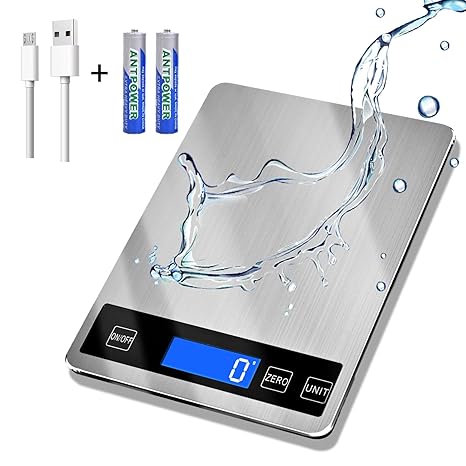
Digital Kitchen Scale
Eye-balling portions is why deficits fail. A scale fixes this instantly. Measure peanut butter and oils to the gram to ensure your numbers are real.
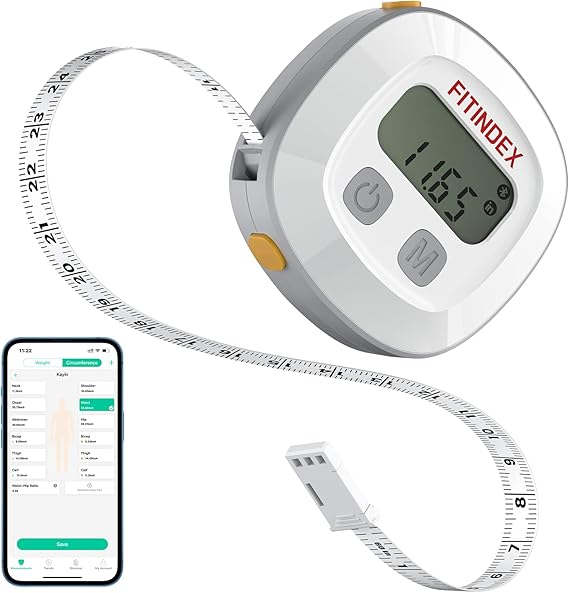
Retractable Body Tape
The scale lies due to water retention. Waist circumference is the truest metric of fat loss. Measure weekly to track real progress when weight stalls.
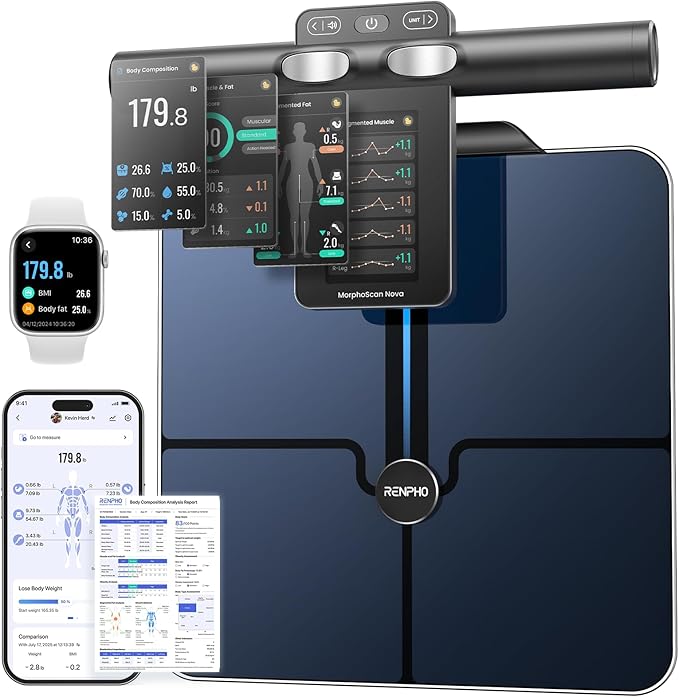
Smart Body Scale
Weigh daily, average weekly. Smart scales sync to your phone to help you visualize trends and ignore daily fluctuations caused by sodium or carbs.
*As an Amazon Associate I earn from qualifying purchases. Prices updated for 2026.
Frequently Asked Questions (FAQ)
Q: Should I “eat back” the calories I burn during exercise?
A: No. Fitness trackers (Apple Watch, Garmin) often overestimate calories burned by up to 50%. If you eat those back, you will likely erase your deficit. Consider exercise calories a “bonus” that speeds up fat loss, not extra food budget.
Q: My weight loss has stalled. Should I lower my calories more?
A: Not necessarily. First, check your adherence. Are you tracking bites, licks, and tastes? If you are 100% consistent and stalled, try a Refeed Day (eating at maintenance) to reset stress hormones before dropping calories further.
Q: Is a 1200 calorie diet safe?
A: For most adults, 1200 is arbitrarily low and often unsustainable. It often leads to nutrient deficiencies and binging. It is better to have a higher calorie budget but increase your output through walking (NEAT) and resistance training.
Q: Which calorie calculator is best for women vs men?
A: The Mifflin-St Jeor equation actually has specific variables for men and women to account for hormonal and compositional differences. It remains the best starting point for both sexes.
Final Verdict: Consistency Over Perfection
Finding the best calorie deficit calculator is important, but it is only the first step. The perfect number on a screen means nothing without execution.
The “Gold Standard” strategy is simple:
- Use Mifflin-St Jeor (with a sedentary setting).
- Eat High Protein to leverage TEF.
- Use Cyclic Refeeds to protect your metabolism.
Don’t get paralyzed by the math. Calculate your numbers today, buy a food scale, and start the process. The mirror will tell you if the math is right within two weeks.
Ready to transform? Drop your calculated numbers in the comments below if you want a quick check on your math!