Rucking for Weight Loss: Why Walking with Weight Works (The Ultimate Guide)

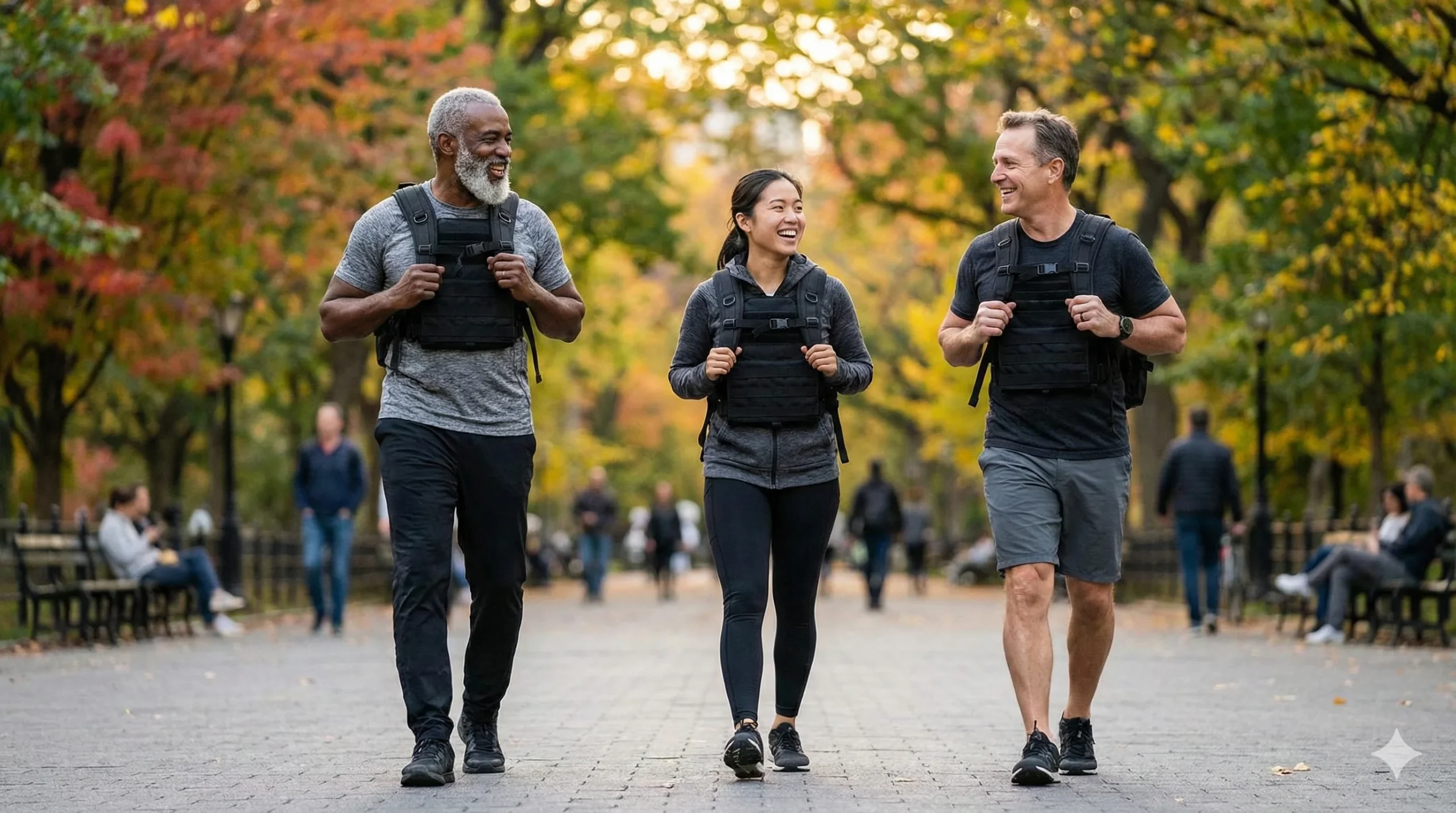
You might have seen them: people walking with purpose, wearing backpacks that look a little too heavy for a casual stroll. It’s not just hiking, and it’s definitely not a fad. It’s Rucking, and if you are looking for an efficient way to achieve rucking for weight loss, you’ve found the holy grail of low-impact cardio.
Rucking is simple: putting weight on your back and walking. But don’t let the simplicity fool you. As someone who has incorporated this into my routine, I can tell you that while it looks easy for the first 10 minutes, the cumulative impact is a game-changer for fat loss and posture.
This guide cuts through the noise. No, you don’t need a $300 military backpack to start, and you definitely shouldn’t be running with it. Here is everything you need to know to turn a basic walk into a fat-burning machine.
What Exactly is Rucking? (Beyond Just a Backpack)
At its core, rucking has military roots—soldiers carrying gear over long distances. However, for the average person looking to lose weight, it is the bridge between strength training and cardio.
The Key Difference: Hiking vs. Rucking
Hiking usually implies varied terrain, trails, and nature. Rucking is terrain-agnostic. You can ruck on a treadmill, around your suburban neighborhood, or in a city park. The defining factor is the external load carried for fitness purposes, not just transport.
Why It Went Viral for Fat Loss
The fitness world is obsessed with High-Intensity Interval Training (HIIT), but rucking champions a different hero: LISS (Low-Intensity Steady State) cardio with a twist. It keeps your heart rate in “Zone 2”—the sweet spot where your body efficiently burns fat for fuel without spiking cortisol (stress hormone) levels excessively.
The Science: Does It Really Burn 3x More Calories?
The short answer: Yes, it can.
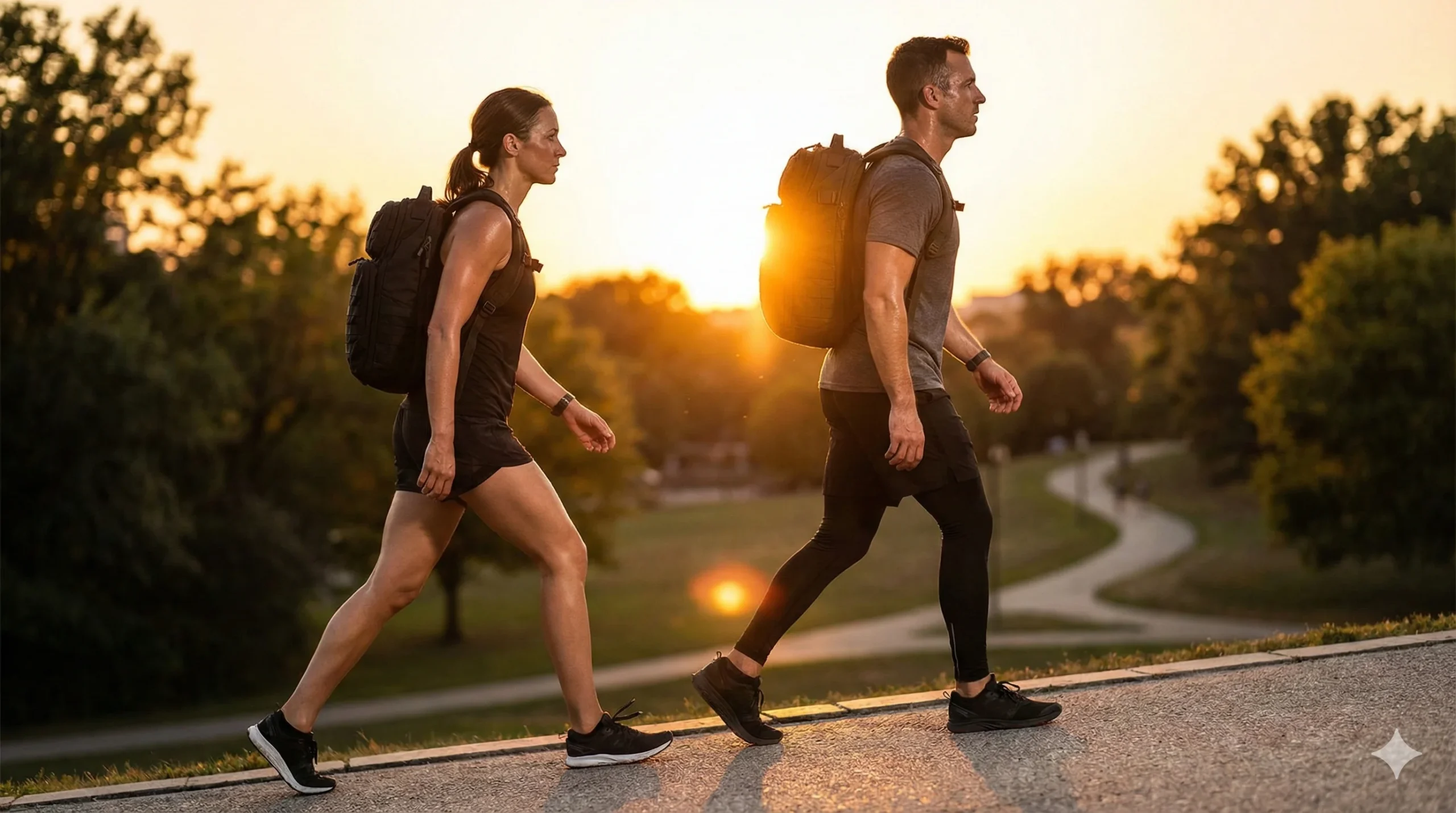
When you walk, your body is efficient. When you add 20-30 lbs (approx. 9-14 kg) to your back, your body has to work significantly harder to move that mass. You burn calories to move your body plus the weight, and you burn more calories stabilizing your core and maintaining an upright posture.
Comparison: Walking vs. Running vs. Rucking
Below is a breakdown of why rucking is often the superior choice for longevity and sustainable weight loss.
| Feature | Walking (Unloaded) | Running | Rucking |
|---|---|---|---|
| Calorie Burn | Low (Baseline) | High | Moderate to High (2-3x Walking) |
| Joint Impact | Very Low | High (3-5x Bodyweight) | Low (Similar to walking) |
| Muscle Engagement | Legs & Glutes | Legs & Cardio | Legs, Core, Shoulders, Back |
| Posture Benefit | Neutral | Negative (tendency to slouch) | Excellent (pulls shoulders back) |
Rucking vs. Running: The Joint Impact Battle
Running is great, but the impact forces are high. Every time you land, your knees absorb shock.
In my experience, rucking offers a “loophole.” You get the cardiovascular strain of a jog, but your feet never leave the ground simultaneously. It is low impact. If you have bad knees or hate the feeling of pounding the pavement, rucking for weight loss is your ideal solution.
Body Composition: Muscle + Cardio
Rucking is unique because it builds work capacity. It strengthens the “posterior chain”—glutes, hamstrings, and lower back—while stripping fat. You aren’t just getting smaller; you are getting stronger.
How to Start if You Are a Beginner: The 10% Rule
If I had to start over tomorrow, I wouldn’t load up 50 lbs immediately. The golden rule, supported by experts and painful experience, is: Start with 10% to 15% of your body weight.
-
If you weigh 180 lbs, carry 18-25 lbs. No more.
The Gear: Do I Need a $200 Backpack?
Absolutely not. While specialized gear (like Goruck or plate carriers) is fantastic because it keeps the weight high and stable, you can start today for free.
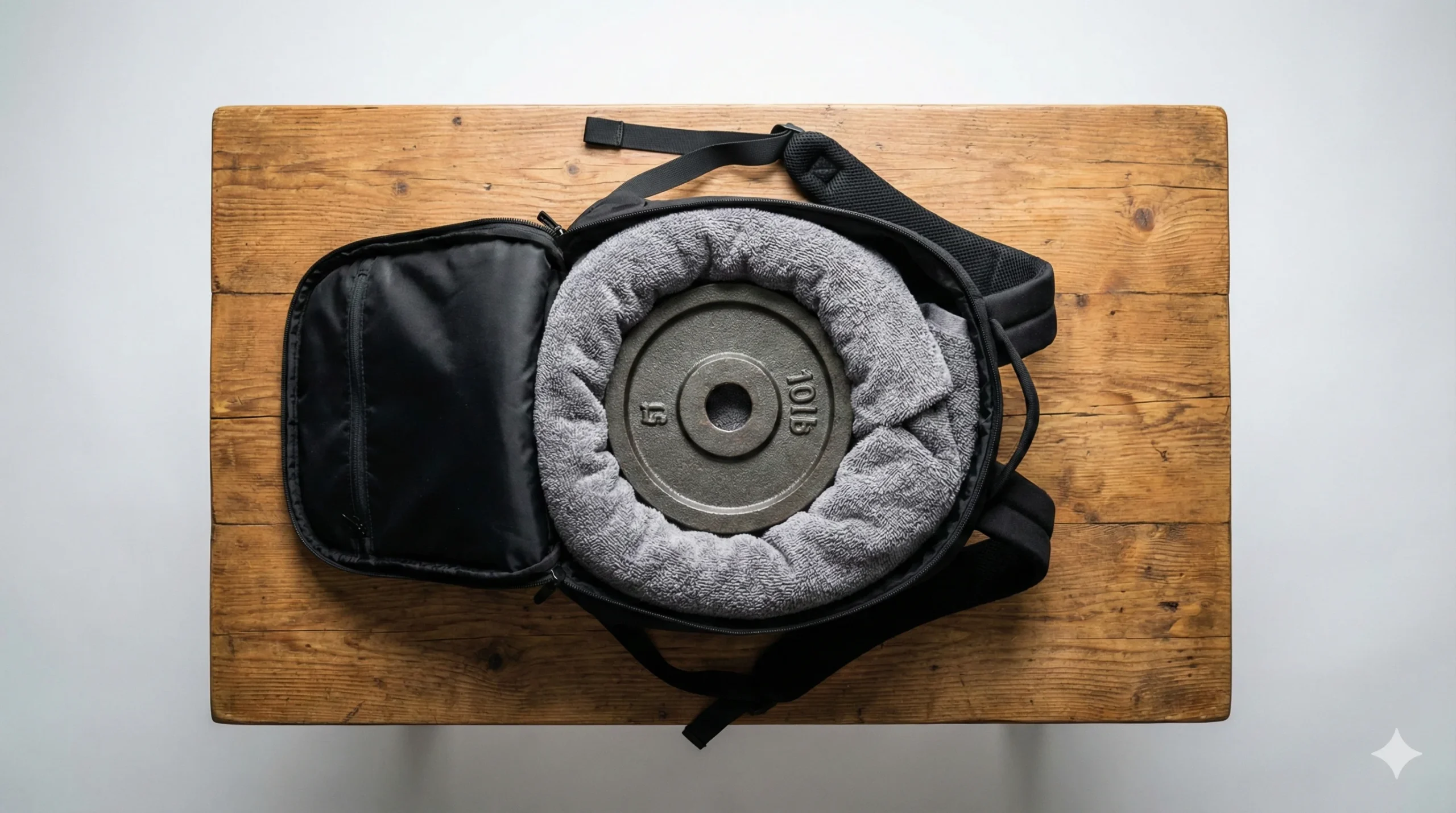
The “Towel Trick”: When I first tested this, I didn’t have a weighted vest. I took a sturdy backpack, grabbed some standard weight plates (books or sandbags work too), and wrapped them in thick towels.
-
Why? If you just throw a weight in a bag, it will dig into your lower back. The towel adds volume and cushioning, preventing the weight from shifting.
Posture: The “Anti-Computer” Hunch
One of the most surprising benefits I noticed was postural correction. Modern life makes us hunch forward over phones and laptops.
When you put a heavy ruck on, you physically cannot hunch. To balance the load, you are mechanically forced to roll your shoulders back and engage your core. It’s like a corrective brace that also burns fat.
🛠️ Rucking Buying Guide: 3 Critical Points
Before you grab any old bag, consider these three factors to avoid injury:
- Strap Padding: Ensure the backpack has wide, padded shoulder straps. Thin straps will cut off circulation and cause nerve pain under a 20lb+ load.
- Weight Stability: The weight must not bounce. If using a standard backpack, use the “Towel Trick” to wedge the weight against the back panel.
- Hip Belts: If you plan to carry more than 15% of your body weight, a hip belt is mandatory to transfer some load from your shoulders to your pelvis.
🎒 Rucking Starter Kit
Turn a walk into a workout. Essential gear to carry weight safely.
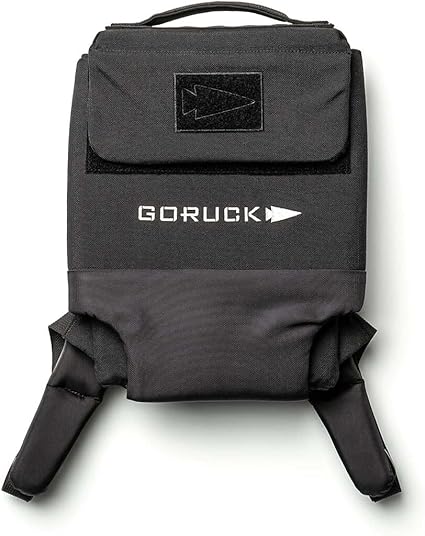
Tactical Ruck Backpack
Don't use a school bag. You need thick padded straps and a Chest Clip to keep the weight high on your back and prevent spine injury.
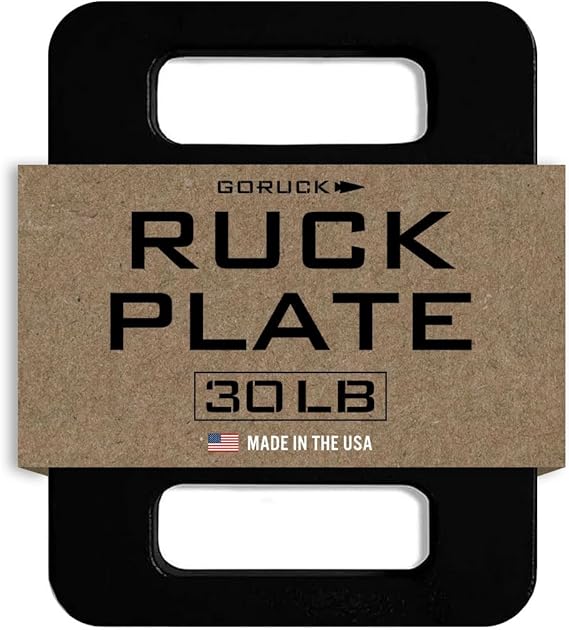
Cast Iron Ruck Plate
Better than books. This flat plate sits close to your spine, preventing the "backward pull" lever arm that causes lower back pain.
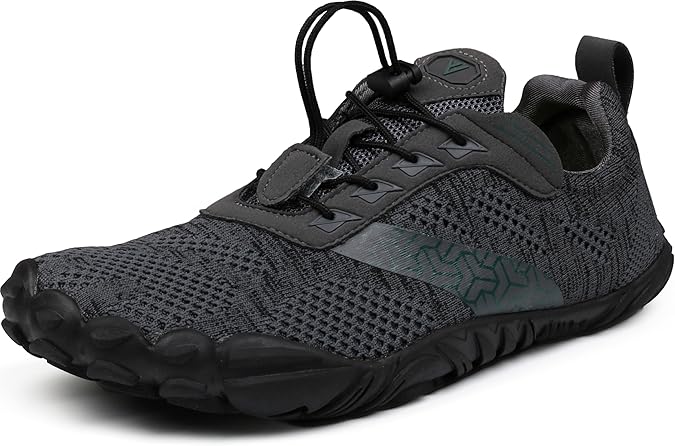
Trail Running Shoes
No Squishy Runners. Your feet support extra load. You need a firm sole (like Salomon or Merrell) that won't collapse under 30lbs of weight.
*As an Amazon Associate I earn from qualifying purchases. Prices updated for 2026.
Rookie Mistakes That Will Wreck Your Back
Rucking is simple, but doing it wrong can be painful. Avoid these three traps:
- The Cardinal Sin: Running with the Ruck. Don’t do it. Rucking is about marching. The impact on your ankles and knees multiplies exponentially if you jog.
- The Weight Distribution Trap. The weight should ride high on your upper back, between your shoulder blades. If it sits near your butt, it pulls your lumbar spine into a dangerous arch.
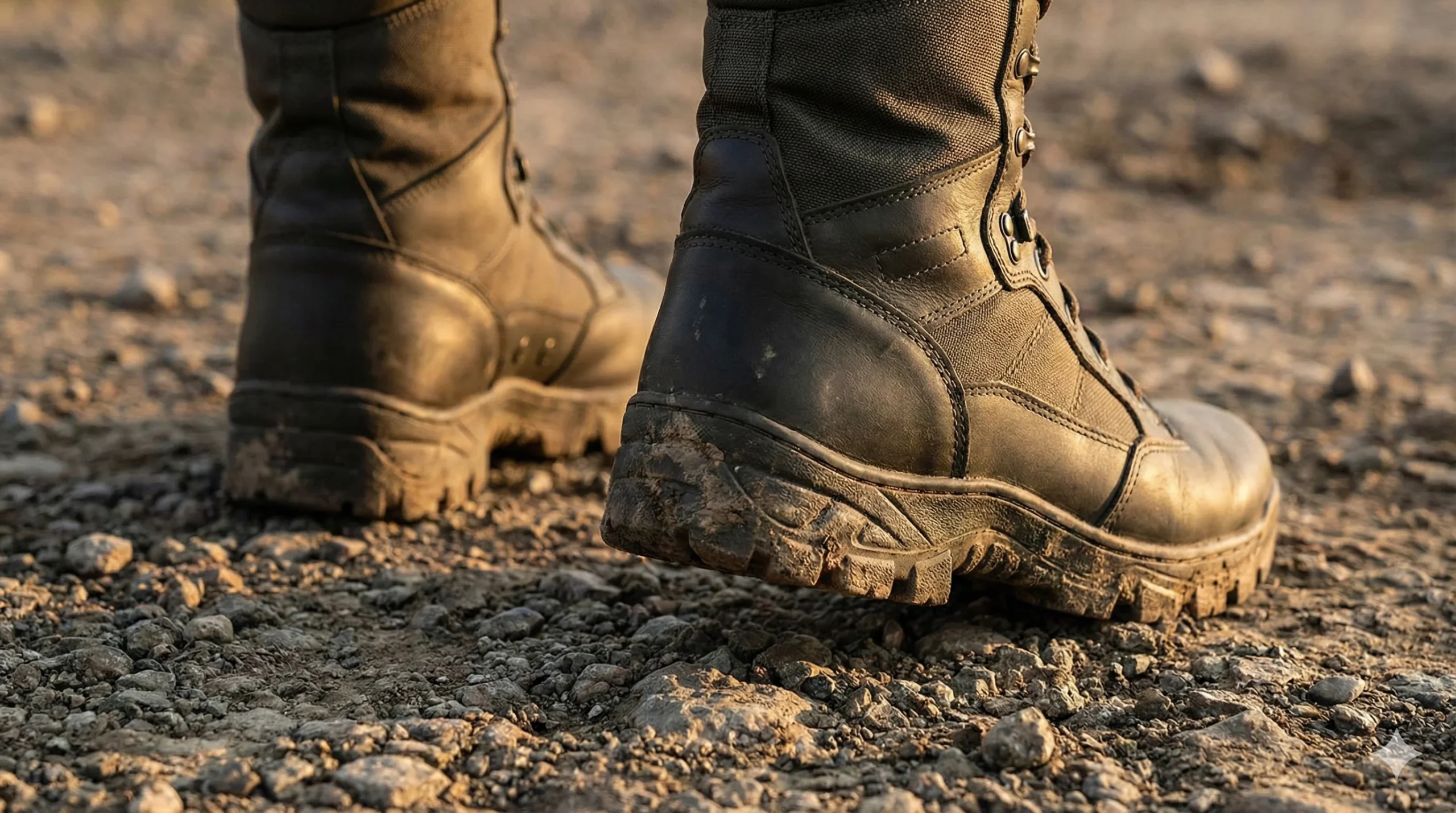
- Ignoring Footwear. Your feet are supporting extra load. Soft running shoes may collapse. Opt for boots or cross-trainers with a firmer sole.
📅 4-Week Progression Plan for Weight Loss
Don’t rush the weight. Rush the consistency.
| Week | Load (% Bodyweight) | Frequency | Duration |
| Week 1 | 10% | 2x per week | 20 Minutes |
| Week 2 | 10% | 3x per week | 30 Minutes |
| Week 3 | 15% | 3x per week | 30 Minutes |
| Week 4 | 15% | 3x per week | 45 Minutes |
Frequently Asked Questions (FAQs)
How many calories does rucking burn?
On average, rucking burns 2 to 3 times more calories than walking at the same pace. A person weighing 180 lbs rucking with 30 lbs can burn between 400-600 calories per hour depending on pace and terrain.
How often should I ruck for weight loss?
Start with 2-3 times a week to let your traps and shoulders adapt. Unlike regular walking, rucking requires muscle recovery.
Will rucking build muscle?
It builds muscular endurance in your legs, core, and upper back. While it won’t replace heavy squats for hypertrophy, it is a world-class tool for “functional strength” and maintaining muscle while in a calorie deficit.
Can I ruck with a regular backpack?
Yes, provided it is sturdy. Just remember to use the towel trick to keep the weight high and prevent it from digging into your spine.
Conclusion: The Verdict on Rucking
Rucking is effective because it is sustainable. It turns a basic human movement—walking—into a resistance exercise that burns fat, builds endurance, and fixes your posture, all without destroying your knees.
Your next step: Grab a backpack, wrap a 10lb weight in a towel, strap it high, and walk for 20 minutes today. Your future, leaner self will thank you.