Best Home Gym Flooring Over Carpet: Protect Your Floor (and Your Knees)
You’ve finally decided to build a home gym. You have the space, you have the motivation, but there’s one major obstacle under your feet: Carpet.
Most people think carpet offers “extra padding.” I used to think that too. But after years of training and setting up gyms in spare bedrooms and apartments, I can tell you that carpet is often your worst enemy. It’s unstable, it traps sweat, and it can ruin your workout mechanics.
If you are looking for the best home gym flooring over carpet, you need more than just a yoga mat. You need a system that provides stability for your lifts and protection for the subfloor. In this guide, I’m going to walk you through exactly what works, what fails, and the “hacks” I’ve learned the hard way.
The Real Problem: Why Lifting on Carpet is Dangerous
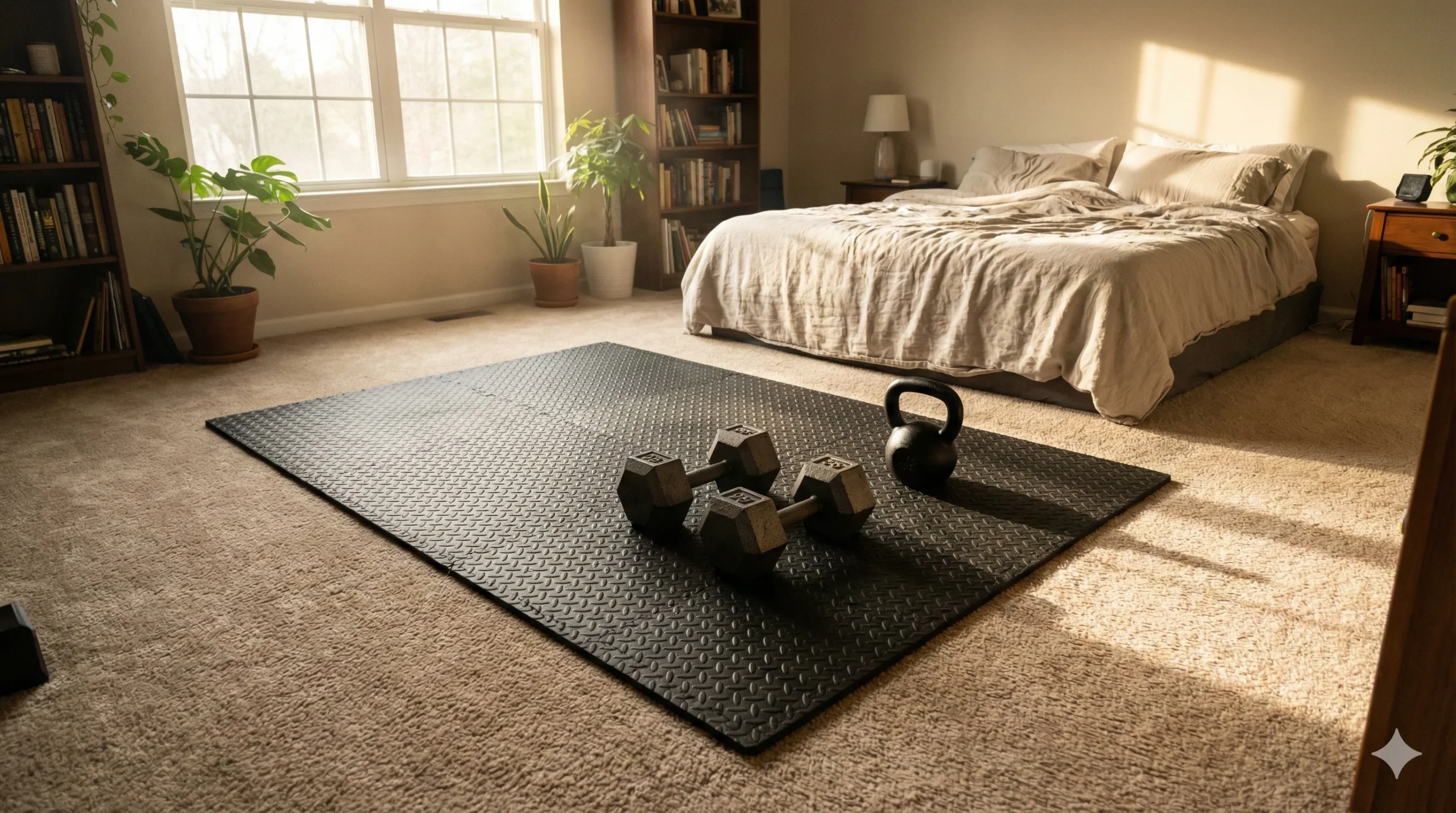
Before we talk about products, we need to talk about physics. Putting gym equipment directly on carpet—or using the wrong type of flooring over it—creates three specific problems that I’ve encountered personally.
The “Quicksand Effect” (Instability)
If you take nothing else from this article, remember this: Soft on soft is a recipe for injury.
I remember vividly trying to squat 80kg (about 176 lbs) on some cheap foam tiles laid directly over a medium-pile carpet. As I descended into the hole, I felt my heels sinking unevenly. My knees started trembling—not because the weight was too heavy, but because the ground was literally shifting beneath me.
When your floor compresses unpredictably, your stabilizer muscles have to work overtime. This “quicksand” effect kills your power transfer and puts massive stress on your ankles and knees. You need a surface that pushes back, not one that sinks.
The Invisible Enemy: Moisture and Mold
This is the gross part that no one mentions in product descriptions. Carpet acts like a sponge.
When you sweat during a high-intensity session, that moisture seeps through the seams of standard rubber mats and settles into the carpet fibers below. Since the rubber blocks airflow, that moisture sits there. I once dismantled a gym setup after six months to move out, only to find a dark, moldy patch on the carpet and a smell that required professional cleaning.
“Carpet Walk” and Permanent Craters
Carpet has a “grain”—the fibers tend to lean in one direction. When you lay down lightweight interlocking tiles, they will eventually drift or separate as you move. Doing lunges or burpees causes the seams to pop open, creating trip hazards.
Furthermore, if you leave a heavy power rack or dumbbell stand in one spot, the foam padding under the carpet gets crushed. Often, this damage is permanent, leaving “craters” that never bounce back even after you remove the gym.
Expert Criteria: What to Avoid (And What to Buy)
Not all flooring is created equal. Through trial and error, I have developed a strict filter for what I allow in a gym.
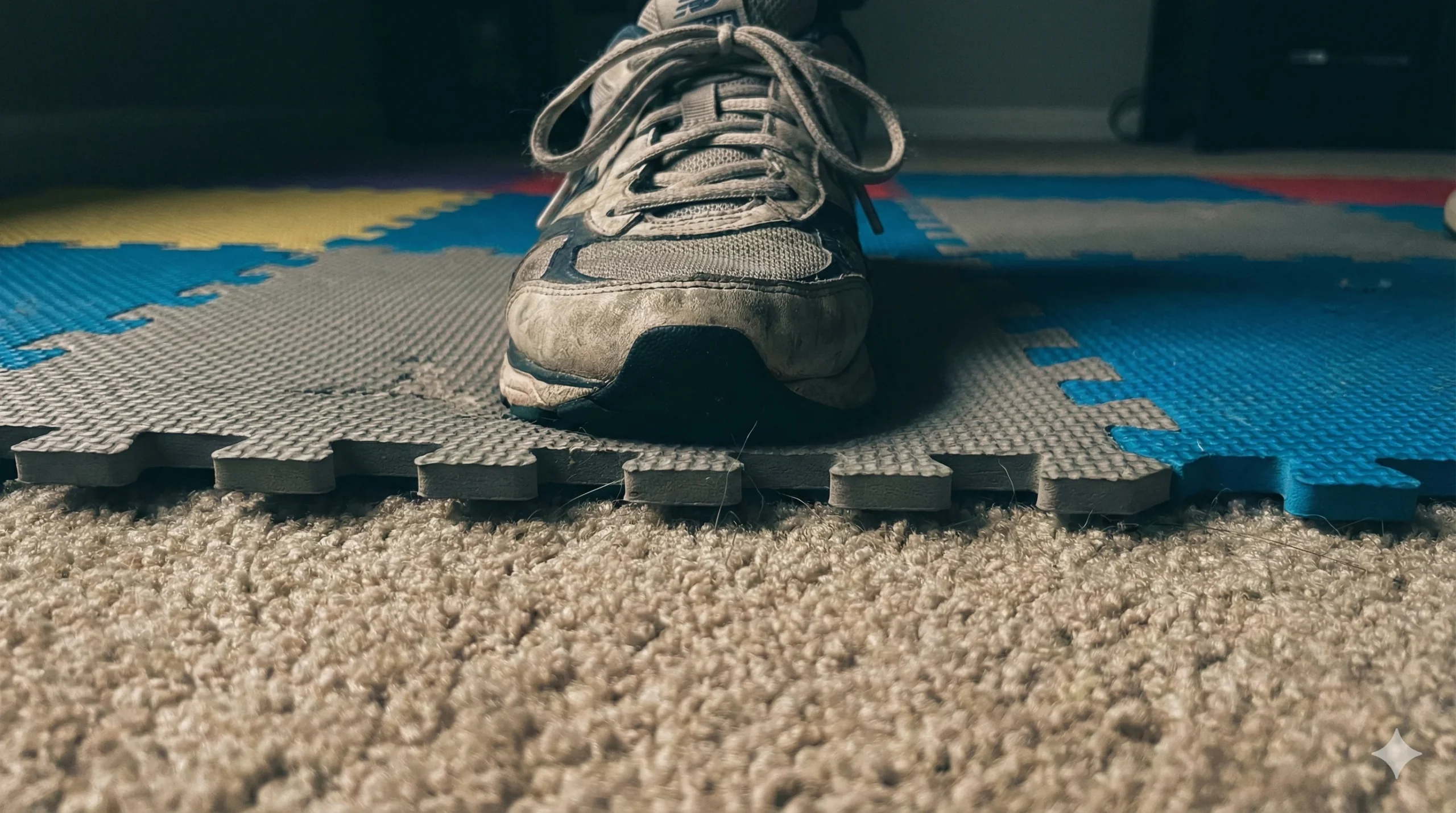
❌ What I Hate: Low-Density EVA Foam
You’ve seen these. They are the colorful puzzle mats sold in supermarkets or big-box stores, usually marketed for playrooms or light yoga.
Do not use these for a serious gym. In my experience, they are garbage for weightlifting. They compress until they are paper-thin, they get gouged by fingernails or dropped plates, and they offer zero stability. They are fine for a toddler, but not for a barbell.
✅ What I Love: Vulcanized Rubber & Rigidity
To protect the carpet and yourself, you need density. You are looking for:
-
Thickness: At least 8mm for general use, but 3/4 inch (approx 20mm) is the gold standard.
-
Material: Recycled crumb rubber or vulcanized rubber (like Horse Stall Mats).
-
Weight: Heavier mats stay in place better on top of carpet.
Top 3 Solutions for Gym Flooring Over Carpet
Here are the best options depending on your budget and training style.
[Insert Image: Comparison Chart Placeholder] Visual Note: A table comparing “Horse Stall Mats”, “PVC Tiles”, and “Rubber Rolls” based on Price, Durability, Stability over Carpet, and Installation Difficulty.
1. The “Indestructible” Choice: Horse Stall Mats
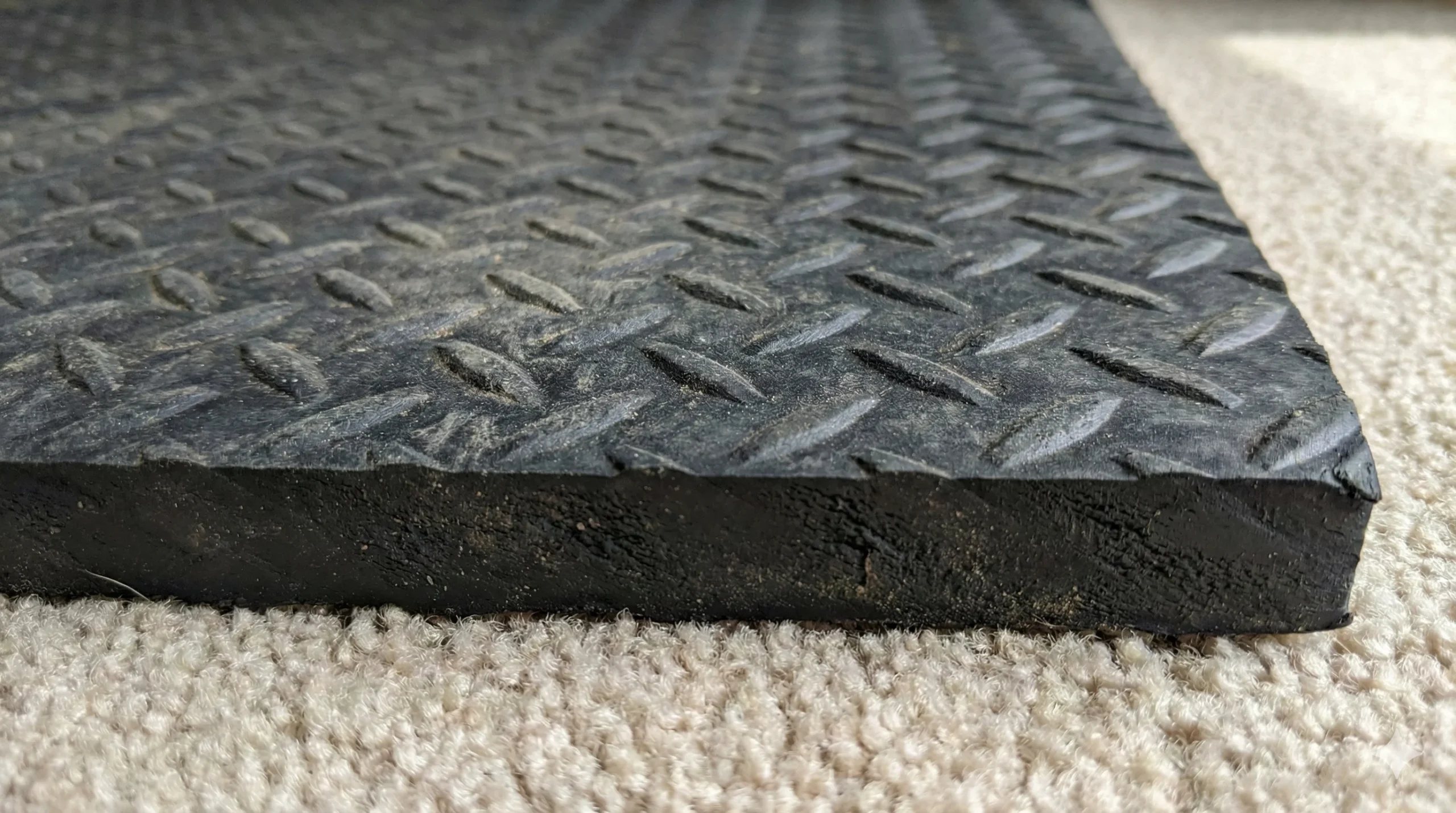
If you browse forums like Reddit’s r/homegym, this is the number one recommendation for a reason. These are 4×6 foot mats made of 3/4-inch thick solid rubber, originally designed to keep horses from injuring their legs in stables.
-
Why they work: They are incredibly heavy (often 100 lbs per mat). Once you lay them down over carpet, they generally don’t slide. They are dense enough that they don’t bend significantly even over plush carpet.
-
Pros: Virtually indestructible, cheapest price-per-square-foot for professional quality.
-
Cons: They can smell like rubber tires for a few weeks; difficult to move alone.
2. Modular Raised PVC Tiles (Great for Damp Basements)
If you are worried about the “mold sandwich” issue I mentioned earlier, this is your solution. These are rigid plastic tiles (often used in garages) that have small “feet” underneath.
-
The trick: Because they are rigid, they don’t sink into the carpet like foam does. Because they are raised, air can circulate between the carpet and the floor.
-
Best for: Cardio areas, lighter weights, and basements where humidity is a concern.
-
Note: They can be slippery, so you might want to put a thin rubber mat on top of them for traction.
3. High-Density Rubber Rolls
If you have a large room to cover, rolls are cleaner looking than mats. However, over carpet, thin rolls (under 8mm) will bunch up.
-
My advice: Only use rolls if they are 8mm or thicker and if you can tape them down securely. They look professional but are harder to install over a soft subfloor compared to heavy stall mats.
The Pro “Hack”: The Plywood Sandwich (Vital for Heavy Lifting)
If you plan on doing Deadlifts or heavy Squats, placing rubber directly over carpet—even thick rubber—might still feel too spongy.
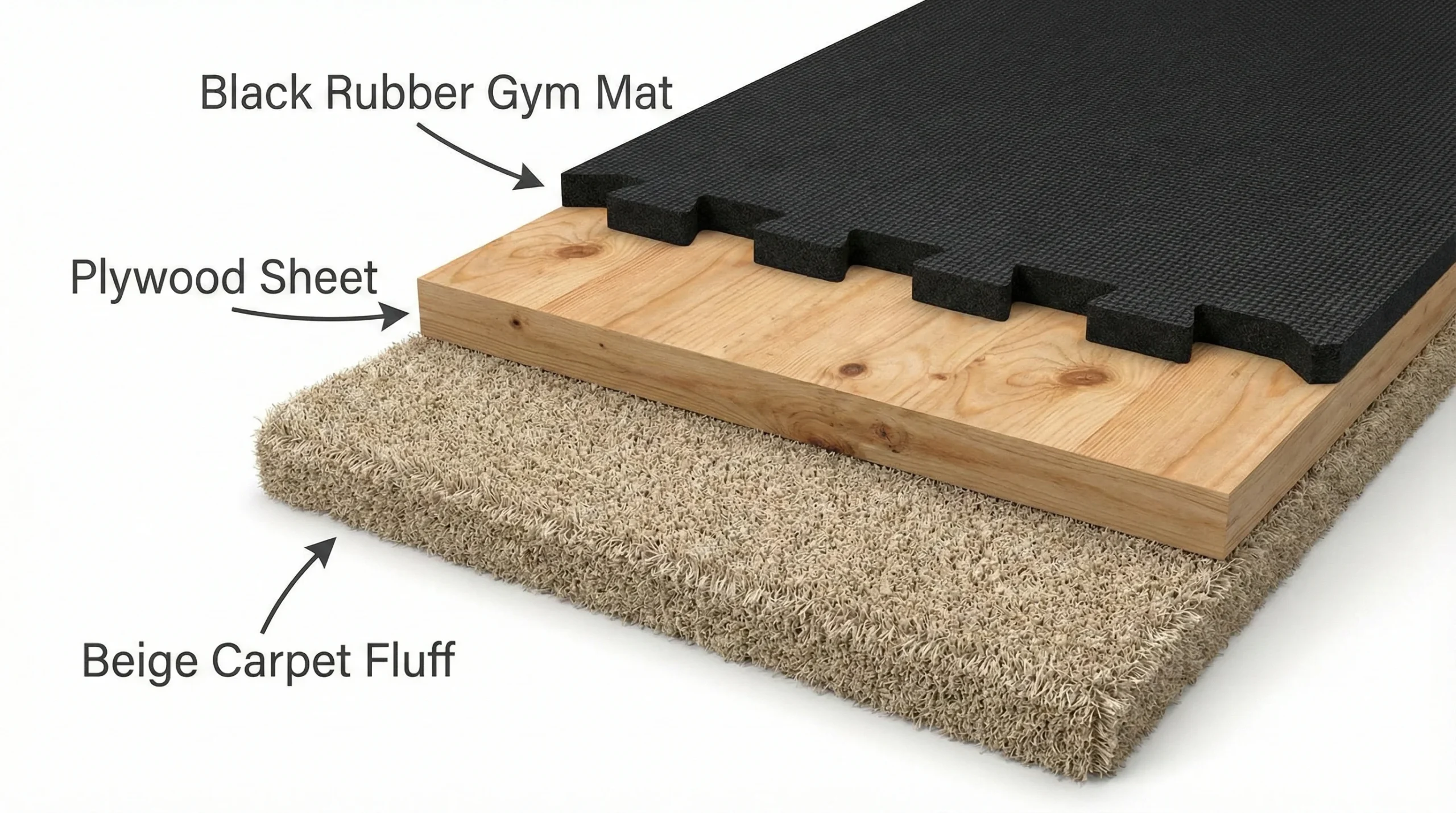
This is the secret weapon I use to create a commercial-gym feel in a carpeted bedroom. It’s called the “Plywood Sandwich.”
Why it works: The wood acts as a load disperser. It stops your feet from sinking and prevents heavy equipment from crushing the carpet sub-floor permanently.
[Insert Image: YouTube Video Placeholder] Video Suggestion: “How to Build a DIY Deadlift Platform on Carpet” or “Installing Horse Stall Mats over Plywood”.
How to build it:
- Base Layer (The Carpet): Leave your carpet as is.
- Middle Layer (Stability): Lay down sheets of 3/4-inch Plywood (Standard 4×8 sheets). This creates a rigid, unified platform.
- Top Layer (Traction/Protection): Place your Horse Stall Mats or rubber tiles on top of the wood.
I strongly recommend this method if you are lifting over 100kg. It protects the carpet from “cratering” and saves your joints from instability. It elevates the floor slightly, but the trade-off in performance is worth it.
Low-Cost Hacks That Actually Work
Maybe you are renting, or you are on a tight budget and already bought those puzzle mats. I’ve been there. Here is a “field repair” trick I’ve used to make cheap mats usable.
The Duct Tape Trick
Standard puzzle mats pull apart when you do lateral movements.
-
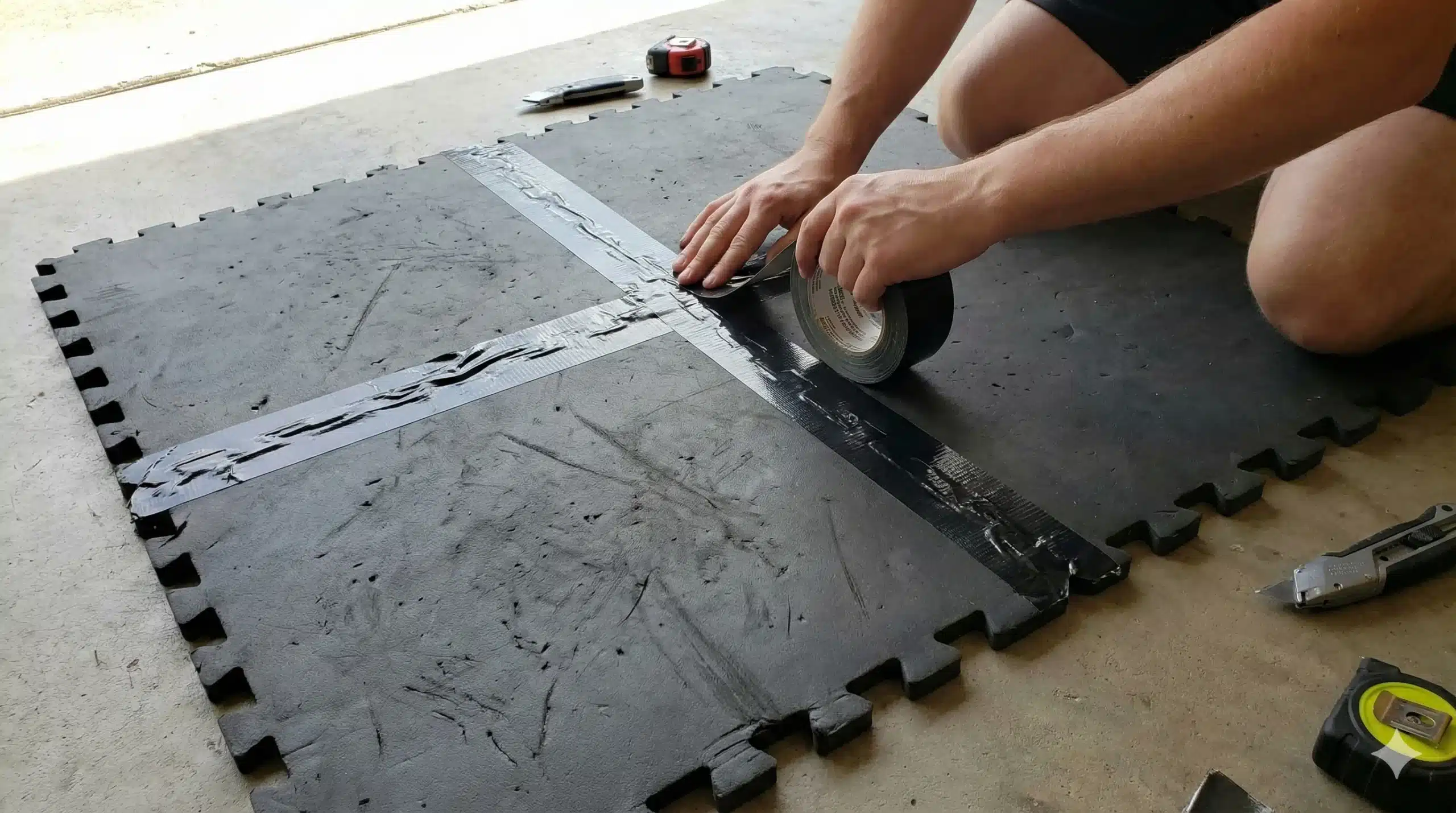
The Fix: Assemble your 2×2 meter block of mats. Flip the entire thing over.
-
The Action: Use heavy-duty Duct Tape or Gorilla Tape along every single seam on the underside.
-
The Result: You essentially create one giant, single-piece carpet. This prevents the seams from splitting during cardio and slows down sweat from dripping immediately into the carpet below. It’s not perfect, but it’s a massive improvement for $5.
| Característica | Horse Stall Mats (Tapetes de Establo) 🐎 | Modular Raised PVC Tiles (Baldosas de PVC) 🧱 | High-Density Rubber Rolls (Rollos de Caucho) 🗞️ | Plywood Sandwich (Plataforma de Madera + Goma) 🏋️♂️ |
| Categoría | La Elección “Indestructible” | Mejor para Humedad / Sótanos | Mejor Estética en Áreas Grandes | El “Hack” Profesional (Carga Pesada) |
| Material | Caucho vulcanizado sólido (aprox. 3/4 pulgada). | Plástico rígido con patas elevadas. | Caucho de alta densidad (mínimo 8mm). | Madera contrachapada (Plywood) + Goma superior. |
| Estabilidad sobre Alfombra | Muy Alta (Por su gran peso, no se deslizan). | Alta (Al ser rígidas, no se hunden). | Media/Baja (Si son finos, se arrugan). | Máxima (Crea una superficie sólida y unificada). |
| Instalación | Difícil (Son muy pesados y difíciles de mover solo). | Fácil (Sistema modular tipo rompecabezas). | Media (Requiere cinta adhesiva fuerte). | Compleja (Requiere construcción de capas). |
| Protección contra Moho | Media (Puede atrapar humedad si no se ventila). | Excelente (Circulación de aire por debajo). | Media. | Alta (Si se hace correctamente con barreras). |
| Ideal Para | Levantamiento general, protección de subsuelo. | Cardio, pesas ligeras, sótanos húmedos. | Cobertura de habitaciones enteras (si es grueso). | Deadlifts, Sentadillas pesadas (>100kg). |
| Pros Principales | Indestructibles, mejor precio por pie cuadrado. | Evita el “sándwich de moho”, no se hunde. | Acabado profesional y limpio (sin tantas uniones). | Dispersa la carga, evita “cráteres” en la alfombra. |
| Contras Principales | Olor fuerte a goma al inicio. | Pueden ser resbaladizas (requieren capa extra). | Difícil de instalar sobre superficie blanda. | Requiere bricolaje y materiales extra. |
Maintenance: Keeping Your Carpet Alive
To wrap up, here are two maintenance tips to ensure you get your security deposit back.
-
Check for “Carpet Walk”: Even heavy mats can migrate over time due to the carpet grain. Every few weeks, check the edges of your workout area to ensure they haven’t drifted into the wall or furniture.
-
Air it Out: If you train hard and sweat a lot, do not leave the mats permanently sealed if you don’t have a vapor barrier (like the plywood or a plastic sheet). Once every few months, lift a corner to check for dampness or smell. If it smells musty, let the carpet dry out completely before laying the floor back down.
🛍️ Quick Buying Guide: Critical Factors
Before you click “buy,” run your choice through this quick 3-point checklist to ensure it’s safe for carpet use:
- The “Squeeze Test” (Density): Can you pinch the material and compress it to half its thickness with your fingers? If yes, don’t buy it. You need vulcanized rubber that barely compresses.
- Weight per Square Foot: On carpet, weight equals stability. Look for mats that weigh at least 3-4 lbs per square foot. Lightweight foam will float and separate.
- Surface Texture: Carpet is slippery underneath; you don’t want the top to be slippery too. Ensure the mat has a pebbled or diamond texture for grip, especially if you sweat heavily.
❓ Frequently Asked Questions (FAQ)
Q: Can I put a squat rack directly on carpet? A: You can, but it’s risky. The rack might wobble if the carpet compression is uneven. Over time, the weight will permanently destroy the padding under the carpet. Use a plywood base or at least thick stall mats under the rack’s feet to disperse the load.
Q: How thick should gym flooring be over carpet? A: Aim for a minimum of 3/4 inch (19-20mm). Anything thinner often lacks the weight to stay put and the rigidity to mask the softness of the carpet below.
Q: Will gym mats stain my carpet? A: Yes, they can. Some cheap rubber products (and even expensive ones) can “outgas” or leach black color over time, especially on light-colored carpet. It is often safer to put a thin layer of plastic sheeting or a felt underlayment between the carpet and the black rubber mats to prevent color transfer.
Q: Is it safe to deadlift on a second floor with carpet? A: Structurally, most residential floors can handle the weight, but the impact noise and vibration will be severe. Using the “Plywood Sandwich” method mentioned above, combined with specific crash pads (silencer pads), is essential to protect the subfloor and keep your neighbors happy.
Bottom Line: Don’t Trust Soft Foam
Don’t trust soft foam if you want hard results. If your foot sinks, your knee suffers.
Building a gym on carpet is entirely possible, but you have to respect the surface. Protect your carpet, but prioritize your safety by using a dense, rigid base like Horse Stall Mats or a Plywood Platform.
Ready to build your gym? Start by measuring your space and sourcing your plywood—your knees will thank you later.
Related posts: 🔥 You might also like…

Ashwagandha Benefits for Men: Testosterone, Stress, and What They Don’t Tell You
Ashwagandha Benefits for Men: Testosterone, Stress, and What They Don't Tell YouIf you search for...

Creatine Monohydrate: The Ultimate Guide to Benefits, Dosage, and Side Effects
Creatine Monohydrate: The Ultimate Guide to Benefits, Dosage, and Side EffectsCreatine Monohydrate...

Magnesium Glycinate vs. Citrate: Which is Best for Sleep? (The Ultimate Comparison)
Magnesium Glycinate vs. Citrate: Which is Best for Sleep? (The Ultimate Comparison)You are...