5-Minute Mobility Routine for Lower Back Pain (That Actually Works)
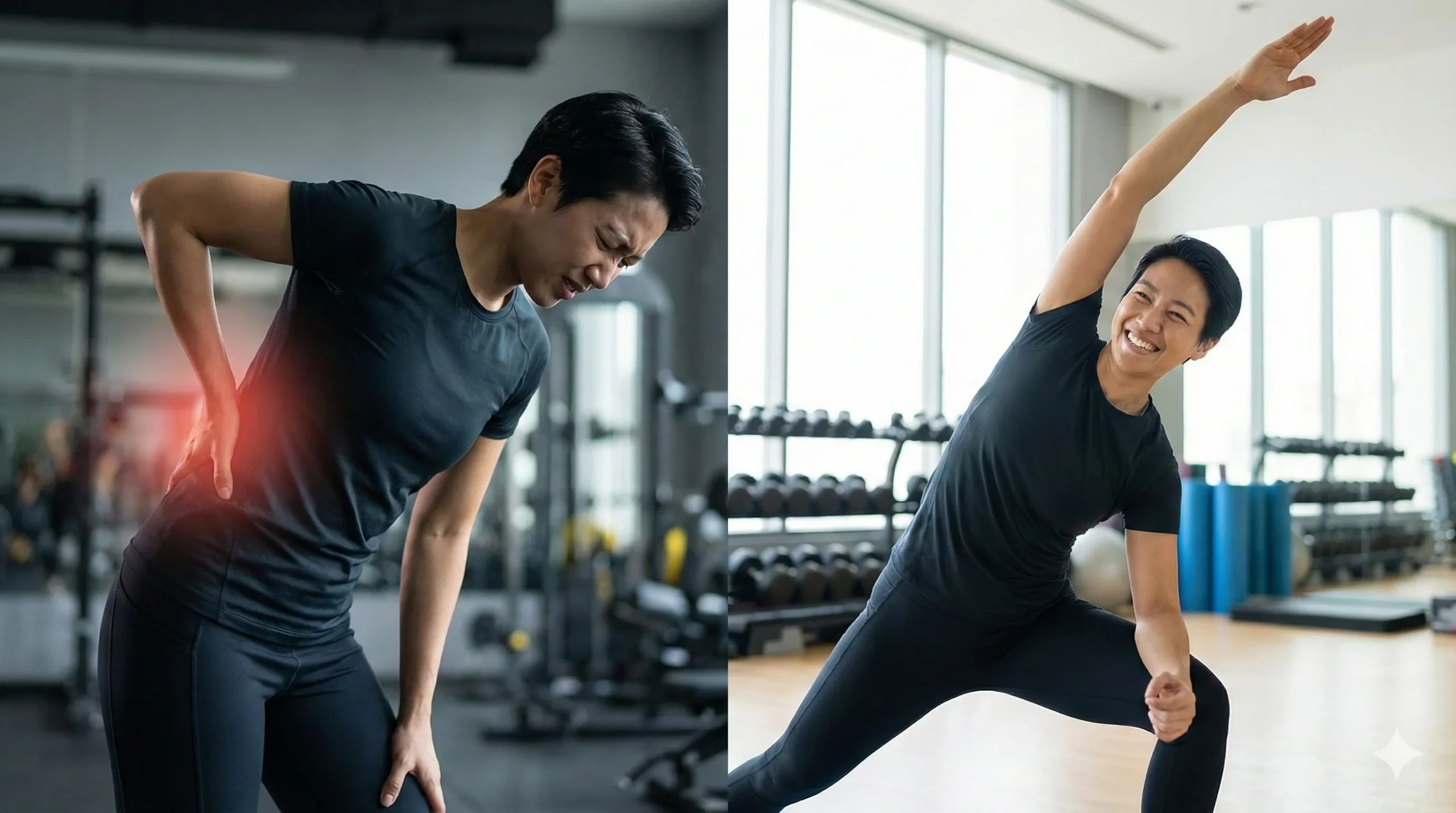
You have five minutes. You are in pain. And if you search Google right now, 90% of the results will tell you to “hug your knees to your chest” or “touch your toes.”
Stop.
If you are dealing with a stiff, achy lower back, trying to “stretch” the pain away by bending forward is often the worst thing you can do. It feels good for two seconds (that’s the stretch reflex), but you might be irritating a nerve or compressing a disc that is already screaming for help.
I’ve seen it a thousand times in my practice. The secret to fixing lower back pain isn’t moving the lower back more; it’s moving the parts above and below it.
This is the “Big Three” 5-minute mobility routine for lower back pain. It’s not about flexibility; it’s about neurology and biomechanics.
Why Your Back Still Hurts (The Mistake Everyone Makes)
Most viral videos get this wrong. They treat the lower back (lumbar spine) like it needs to be loose and floppy.
Here is the reality: Your lumbar spine craves stability. It is your hips and your upper back (thoracic spine) that need mobility.
When you sit all day, your hips get tight and your upper back turns into a stone. When you try to move, your stiff upper back and hips refuse to budge, so your lower back has to do their job. It overworks, rotates too much, and eventually locks up to protect you.
The Fix: We are going to leave the lower back alone. We are going to “unlock” the neighbors.
Generic Advice vs. The “Big Three” Protocol
Before we jump into the moves, look at why the standard advice often fails compared to this method.
| Feature | Standard “Generic” Advice | The “Big Three” Protocol |
| Primary Focus | Stretching the pain (Symptom) | Mobilizing adjacent joints (Root Cause) |
| Movement Type | Passive, static stretching | Active, controlled mobility |
| Safety Profile | Low (Risk of disc compression) | High (Spine remains neutral/stable) |
| Neurology | Ignored | Central focus (Breathing/Safety) |
| Long-term Effect | Temporary relief (20 mins) | Lasting structural change |
Your 5-Minute Routine: The “Big Three”
Perform these movements in this exact order. Don’t rush.
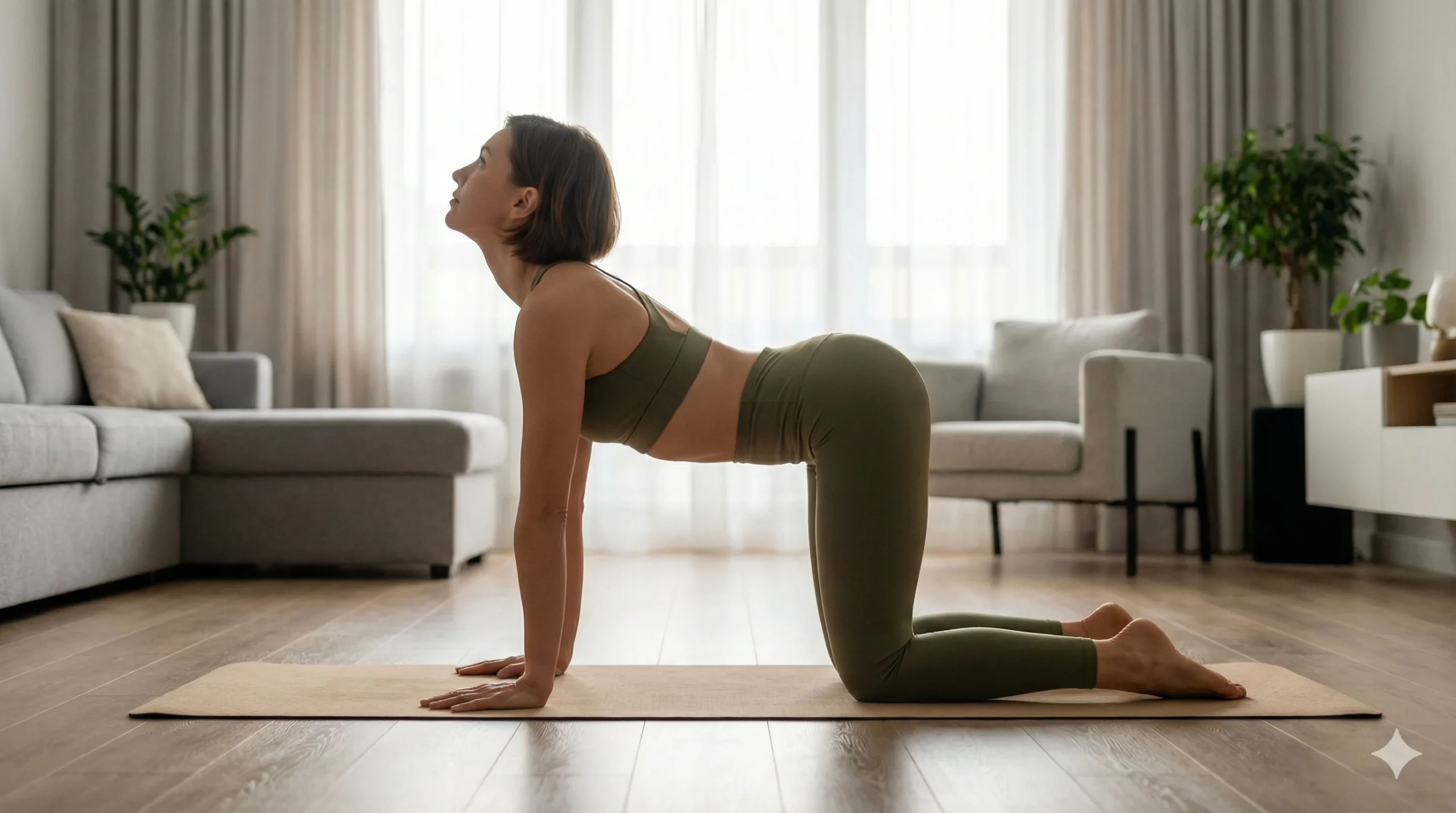
1. The Segmented Cat-Cow (0:00 – 1:30)
The Goal: Lubricate the facet joints and tell your nervous system “movement is safe.”
Most people do the Cat-Cow flailing their spine up and down. That’s useless.
-
How to do it: Get on all fours (quadruped position).
-
The Secret: Imagine moving one vertebra at a time.
-
Execution: Start tucking your tailbone. Then the lower back. Then the mid-back. Finally, the neck drops. Reverse it starting from the tailbone again.
-
Why it works: Segmentation lubricates the joints individually rather than hinging at your most flexible (and unstable) point.
2. Quadruped Thoracic Rotations / “Open Books” (1:30 – 3:00)
The Goal: Release the mid-back to take pressure off the low back.
If your thoracic spine (mid-back) is stiff, your lumbar spine is forced to twist. Let’s stop that.
-
How to do it: Still on all fours, place one hand behind your head (prisoner style).
-
Execution: Rotate your elbow down toward your opposite wrist, then rotate it up toward the ceiling. Follow the elbow with your eyes.
-
Repetitions: Do 4 slow, controlled reps per side.
-
Why it works: By mobilizing the thoracic cage, you instantly reduce the rotational torque demand on your lower lumbar discs.

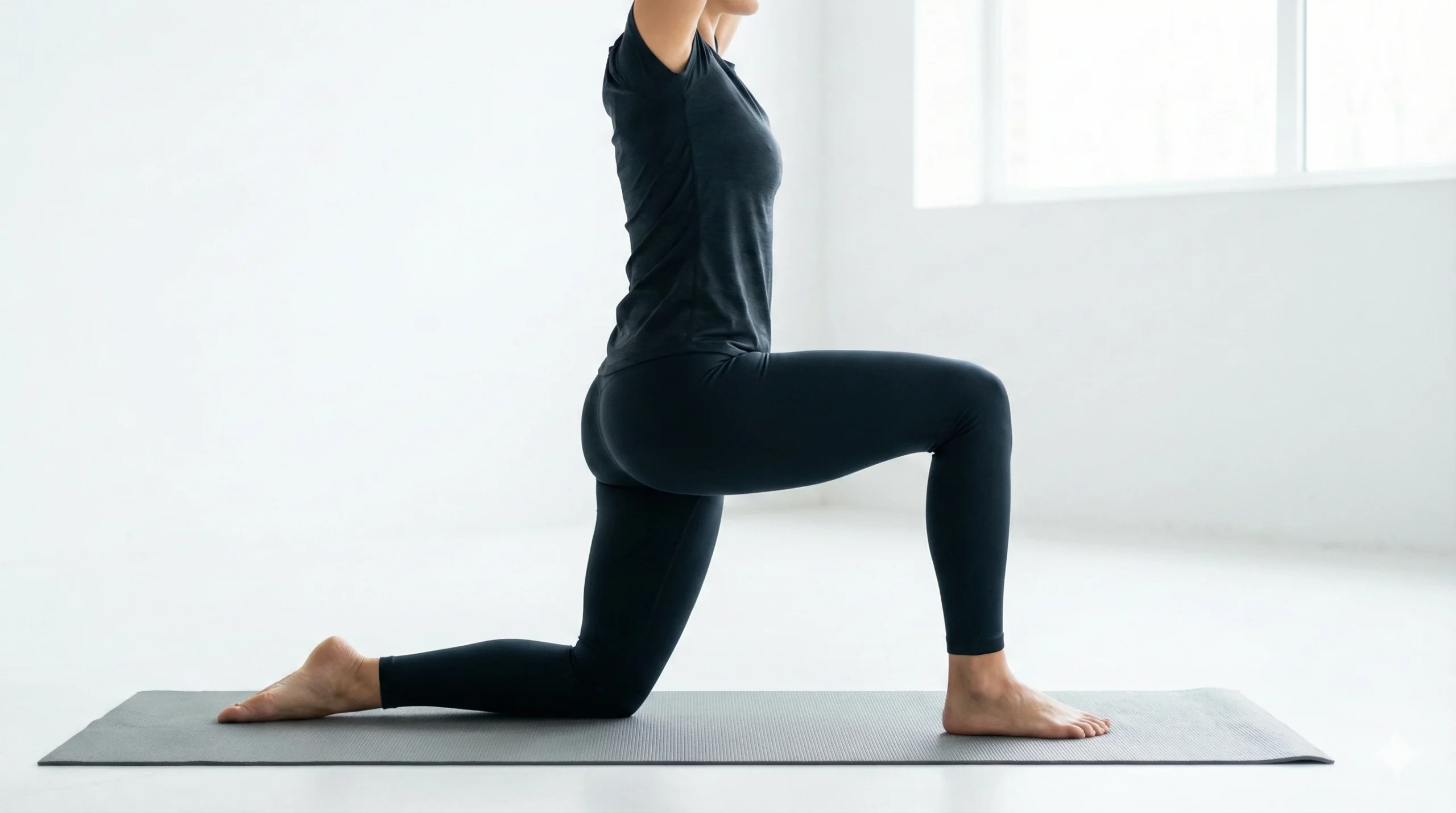
3. The Knight Stretch (Psoas Release with Glute Activation) (3:00 – 5:00)
The Goal: Stop the “front pull” that is compressing your spine.
The Psoas muscle connects your legs directly to your lumbar vertebrae. When you sit, it shortens and constantly pulls your lower back forward and down.
-
How to do it: Get into a half-kneeling position (one knee down, one foot forward).
-
The Critical Detail: Do not just lean forward. Squeeze the glute of the kneeling leg hard.
-
Execution: Keep your torso upright. As you squeeze the glute, you will feel a deep stretch in the front of the hip. Raise the arm on the same side for a deeper effect.
-
Why it works: We are releasing the tension that is physically compressing your vertebrae, rather than just stretching the back muscles that are holding on for dear life.
Acute Pain (8/10)? Hit the “Panic Button”
Sometimes, you can’t even move enough to do the routine above. I had a client, let’s call him Carlos, a long-distance truck driver.
The “Carlos” Case Study: Carlos came to me virtually folded in half. He was at an 8/10 on the pain scale, panicked because he had to attend his daughter’s birthday party in an hour. He thought he had “broken” something. We didn’t stretch. We didn’t do yoga. We hacked his nervous system.
The “Carlos” Protocol (Neurological Reset):
- The 90/90 Position: Lie on your back on the floor. Put your legs up on a chair or couch so your hips and knees are bent at 90 degrees.
- Diaphragmatic Breathing: Place hands on your belly. Inhale for 3 seconds (belly rises), exhale for 6 seconds. Do this for 3 minutes.
- Windshield Wipers: Very gently, let your knees rock side to side. Just an inch or two.
The Result: Carlos’s pain dropped from an 8 to a 3 in five minutes. Why? Because his pain wasn’t just mechanical damage; it was his sympathetic nervous system (fight or flight) locking down his muscles to protect him. By supporting the legs and slowing the breath, we convinced his brain to release the “parking brake.”
He made it to the birthday party.

🛍️ Equipment Guide: Tools to Help Your Spine
You don’t need a gym to fix your back, but having the right tools can make this mobility routine for lower back pain 10x more effective.
- High-Density Foam Roller: Essential for the thoracic spine. Use it before the “Open Books” movement to prep the tissue in your upper back.
- Extra Thick Yoga Mat: If your knees hurt during the “Knight Stretch” (half-kneeling), a standard thin mat won’t cut it. Look for a mat with at least 6mm thickness.
- Lacrosse Ball: For pinpointing specific knots in the glutes that might be contributing to the tension.
🎒 Spine Recovery Tools
You don't need a gym. These 3 simple tools make the "Big Three" routine 10x more effective.
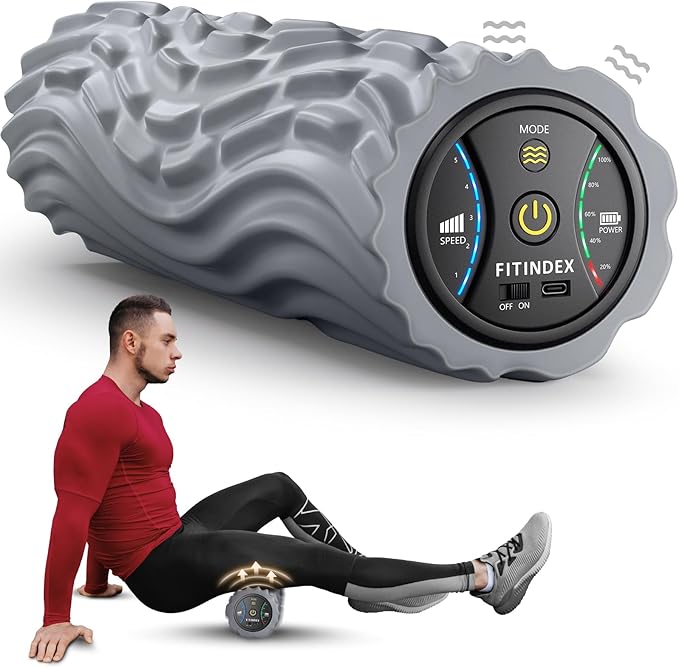
High-Density Foam Roller
Essential for the upper back. Use this before the "Open Books" movement to mobilize stiff thoracic tissue and take pressure off the lumbar spine.
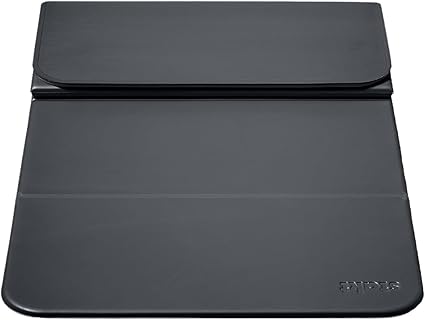
Extra Thick Yoga Mat
Standard mats are too thin for the "Knight Stretch." Look for 6mm+ thickness to protect your knees while you release your tight Psoas.
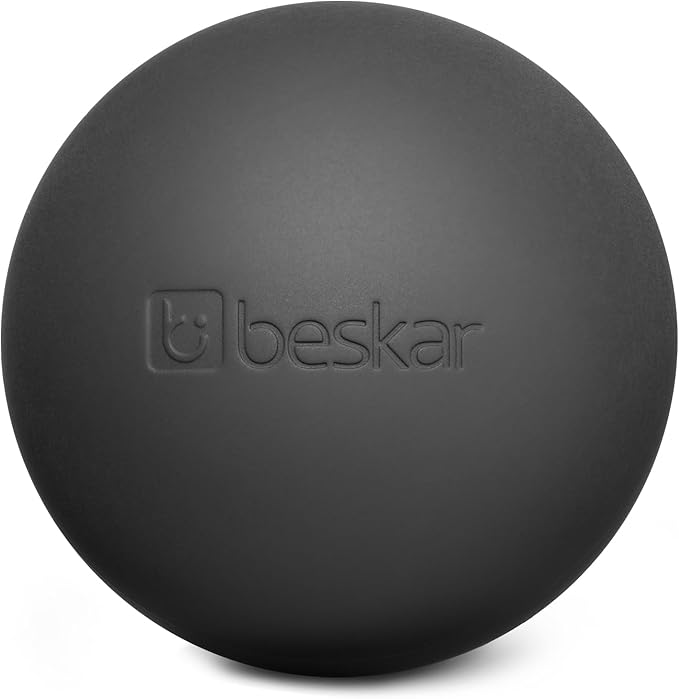
Massage Lacrosse Ball
The sniper tool. While the roller hits broad areas, this targets specific knots deep in the glutes that might be pulling on your lower back.
*As an Amazon Associate I earn from qualifying purchases. Prices updated for 2025.
Frequently Asked Questions
Can I do this routine if I have a herniated disc?
Generally, yes. This routine avoids aggressive flexion (bending forward), which is the primary trigger for most disc issues. However, always move within a pain-free range. If it hurts, stop immediately and consult a specialist.
Is hanging from a pull-up bar good for decompression?
It can be, but many people tense up when they hang, which defeats the purpose. The 90/90 position (legs on a chair) mentioned in the “Carlos Protocol” is often safer and more effective for acute pain because it allows total muscular relaxation without the fight against gravity.
Should I use heat or ice after this mobility routine?
Heat is usually better for chronic stiffness and mobility work as it brings blood flow to the area and helps muscles relax. Ice is typically reserved for acute, sharp inflammation immediately after a fresh injury.
How often should I perform this 5-minute routine?
Consistency is key. Performing this routine daily, preferably in the morning or after long periods of sitting, yields the best results. It is designed to be gentle enough for everyday use.
Conclusion
Consistency beats intensity every single time. You don’t need an hour of yoga. You need 5 minutes of smart, targeted movement that addresses the root cause—immobile hips and a stiff upper back—rather than just pulling on a painful lower back.
Try the “Big Three” tomorrow morning. Your spine will thank you.
Do you have chronic stiffness? Start with the 90/90 breathing to reset your system, then ease into the Cat-Cow. Move well, feel better.
Related posts: 🔥 You might also like…

Ashwagandha Benefits for Men: Testosterone, Stress, and What They Don’t Tell You
Ashwagandha Benefits for Men: Testosterone, Stress, and What They Don't Tell YouIf you search for...

Creatine Monohydrate: The Ultimate Guide to Benefits, Dosage, and Side Effects
Creatine Monohydrate: The Ultimate Guide to Benefits, Dosage, and Side EffectsCreatine Monohydrate...

Magnesium Glycinate vs. Citrate: Which is Best for Sleep? (The Ultimate Comparison)
Magnesium Glycinate vs. Citrate: Which is Best for Sleep? (The Ultimate Comparison)You are...